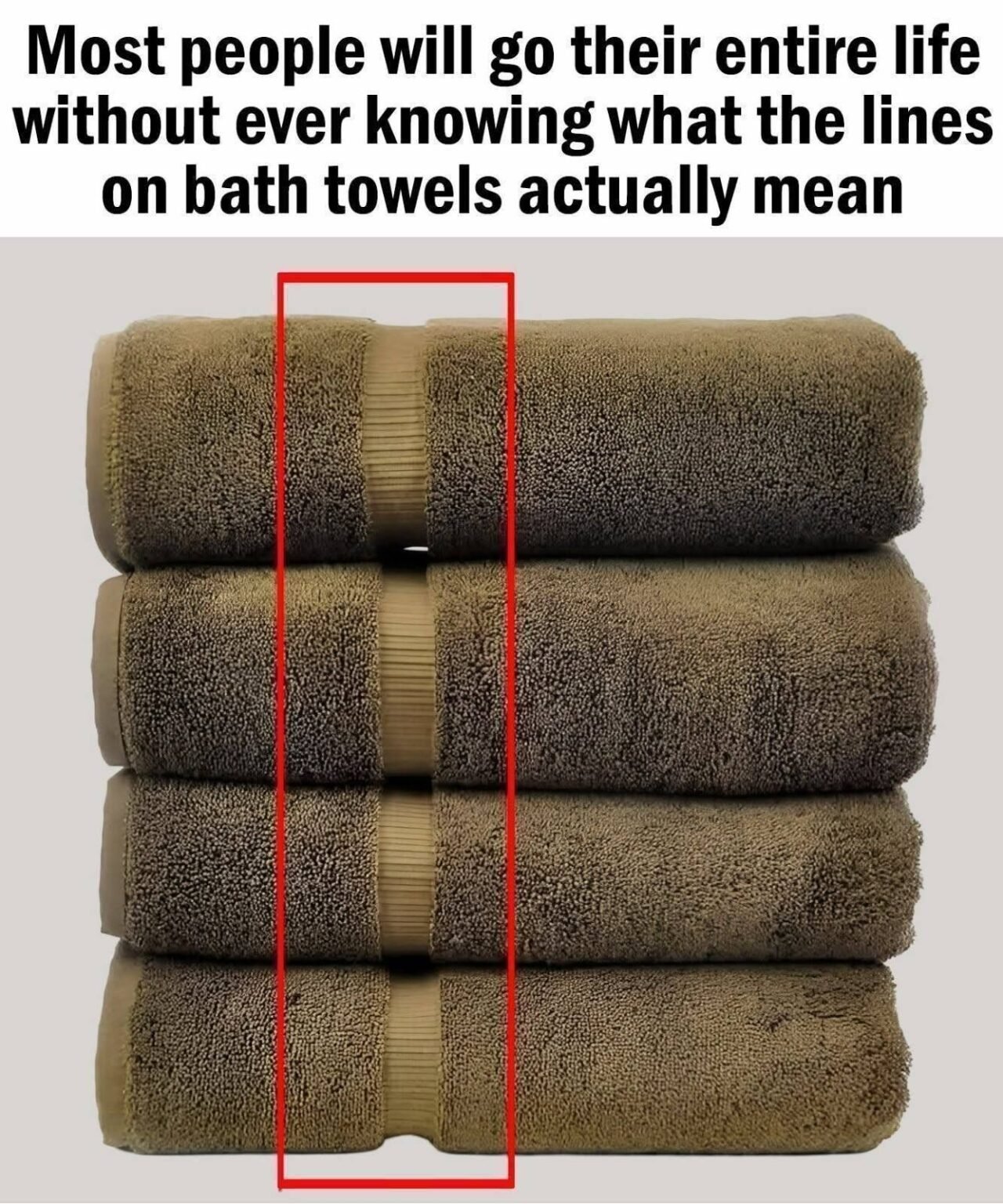
This is one of the easiest things to notice.
The main part of a towel contains thousands of tiny loops. These loops create a soft, fluffy surface and increase the amount of fabric available to absorb moisture.
The striped section doesn’t have the same type of loops. Its flatter weave is therefore less fluffy and can feel slightly rougher or firmer.
This does not mean that the striped section is meant for a different part of your body.
For example, the stripes don’t indicate that one part should be used for your face while another part should be used for your body. They are simply part of the towel’s design and construction.
The Secret Is in the Weaving
To understand these stripes better, it helps to look at how towels are made.
A typical terry towel is designed with loops that stand slightly above the surface of the fabric. These loops increase the surface area of the towel, allowing it to absorb moisture effectively.
However, the entire towel doesn’t have to be woven in exactly the same way.
Manufacturers can create specific sections with a different weave to produce borders, patterns and decorative bands. This allows them to combine appearance, structure and functionality in the same product.
That’s why similar woven bands can be found on many different types of towels, including bath towels, hand towels and smaller wash towels.
What Happens If You Cut the Stripes?
You might wonder whether these stripes could simply be removed since they aren’t the main absorbent part of the towel.
It’s better not to cut them.
A towel is made from interconnected threads, and cutting into the fabric can cause the threads to unravel. Over time, this could damage the towel and make it deteriorate faster.
Even though the striped section may look like a separate piece, it is actually part of the towel itself.
Do the Stripes Tell You How Good a Towel Is?
Not necessarily.
Some people believe that the stripes are an indicator of the towel’s quality, thickness or absorbency. In reality, the stripes alone don’t tell you whether a towel is high quality.
The quality of a towel depends on many factors, including the type of fibers used, the density of the fabric, its weight, the quality of the weaving and the manufacturing process.
Two towels can have almost identical stripes while having completely different levels of softness, absorbency and durability.
Why Do We See Them on So Many Towels?
The answer is a combination of tradition, design and manufacturing.
The woven bands have become a common feature in towel production because they provide a simple way to add a finished look while creating a different woven section within the fabric.
Because we see them so often, most of us barely notice them anymore.
And that’s what makes this small detail so interesting: we use towels almost every day, yet we rarely stop to ask why they look the way they do.
So, What Are Those Stripes Really For?
The next time you grab a bath towel, take a closer look at those familiar bands.
They are mainly related to the design, finishing and structure of the towel. Their flatter weave creates a visual contrast with the fluffy terry fabric and forms an intentional part of the towel’s construction.
So, there isn’t a mysterious hidden code or secret purpose behind them. They’re simply a small but clever detail that combines appearance with the way the towel is made.
A detail we’ve seen thousands of times without thinking about it suddenly makes a lot more sense.
For Complete Cooking STEPS Please Head On Over To Next Page Or Open button (>)
Why You Should Stop Boiling Your Potatoes for Mash

Candied Kielbasa Bites

Classic Vanilla Butter Cake with Buttermilk Sauce

If You Spot a Painted Purple Fence, This Is What It Means
No more bland watermelons! Here’s a sure-fire visual guide to finding the sweetest fruit at the market.