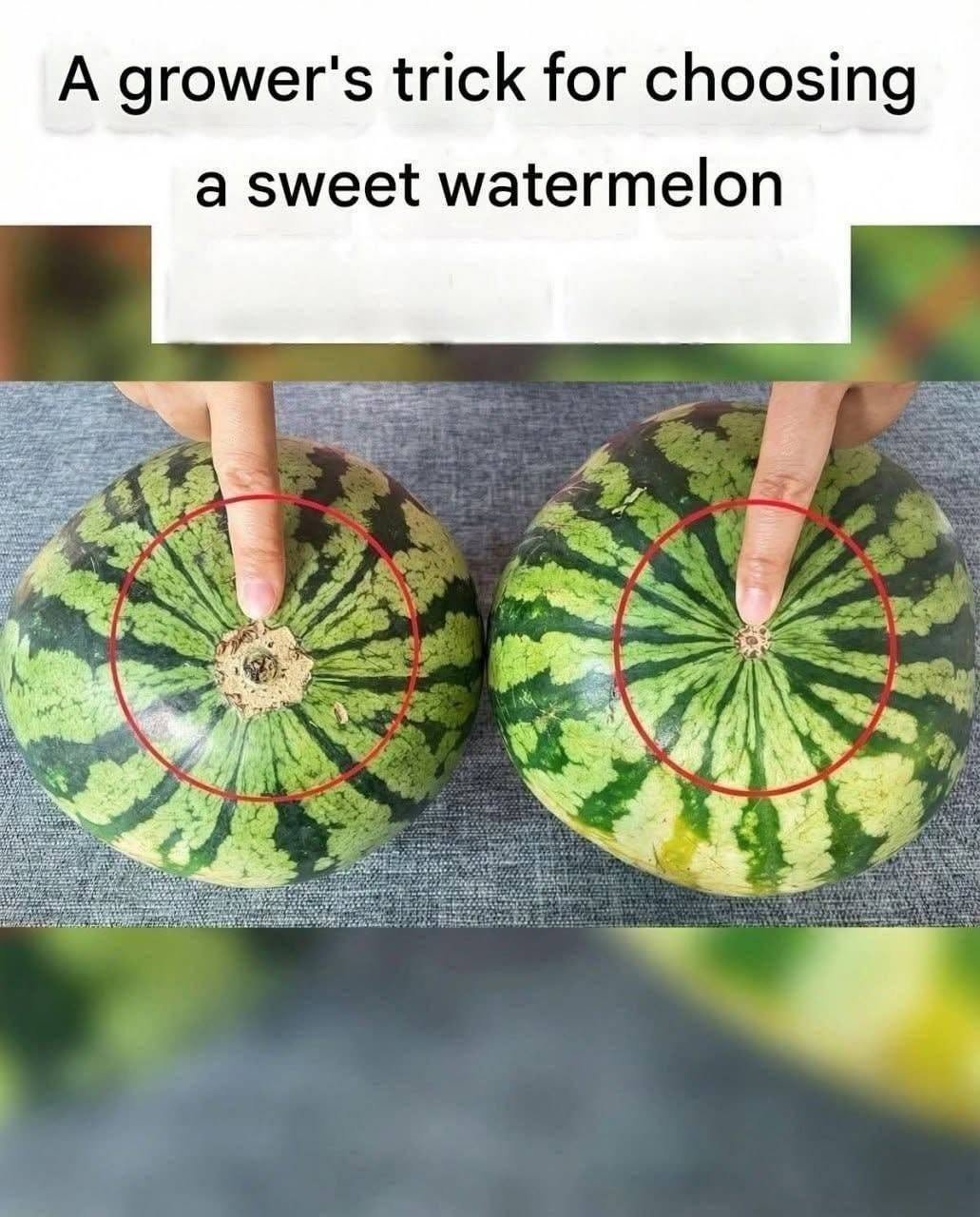
The shape can also give you useful information.
Try to choose a watermelon that looks fairly symmetrical and evenly developed. A round or oval shape is generally preferable to one with unusual bumps, deep dents, or obvious irregularities.
However, shape can vary naturally depending on the variety, so it shouldn’t be treated as a guarantee of sweetness.
The goal is simply to avoid fruit that looks significantly damaged or poorly developed.
What About Those Brown Lines?
You may have noticed that some watermelons have small brown, web-like marks or rough patches on their skin.
These marks are sometimes called sugar spots or webbing. Some people believe that more webbing automatically means a sweeter watermelon.
That idea is popular, but it isn’t a reliable scientific test for sweetness.
Still, the overall appearance of the rind can tell you something about the fruit’s condition. You generally want a watermelon with firm, healthy-looking skin and no major soft spots or damage.
The Sound Test: Does It Really Work?
You’ve probably seen people tapping watermelons at the grocery store and listening carefully.
The idea is that a ripe watermelon should produce a deep, hollow sound, while an underripe or overripe watermelon may sound different.
There is some logic behind this because the internal structure and water content of the fruit affect the sound. However, the tapping method is difficult to use accurately unless you have plenty of experience.
So, if you’re not an expert, don’t rely on the sound alone.
It’s better to combine several clues instead of looking for one magical sign.
Look at the Stem
If the watermelon still has part of its stem attached, take a quick look at it.
A stem that has become dry and brown can be a sign that the fruit was allowed to mature before being harvested. A very green stem may indicate that it was harvested earlier.
However, the stem isn’t always available, especially with watermelons sold in supermarkets, so this is only an additional clue.
A Quick Checklist Before You Buy
Next time you’re standing in front of a pile of watermelons, you don’t need to spend several minutes examining every single one.
Just remember these simple checks:
1. Look for a creamy yellow field spot.
A strong yellow or creamy field spot is generally more promising than a very pale white one.
2. Pick it up.
Choose one that feels heavy for its size.
3. Check the shape.
Look for a fairly symmetrical, well-developed watermelon.
4. Examine the skin.
Avoid fruit with major soft areas, cracks, bruises, or obvious damage.
5. Use the tapping sound only as an extra clue.
Don’t rely on it alone.
6. Check the stem if it’s visible.
A dry stem can provide another clue about maturity.
Is There Really One Perfect Trick?
Unfortunately, there is no single method that can guarantee that a watermelon will be perfectly sweet before you cut it open.
Sweetness depends on several factors, including the variety of watermelon, growing conditions, maturity and harvesting time.
That’s why the best approach is to combine several signs rather than trusting one trick.
And if you only remember one thing from this article, remember to turn the watermelon over and check the field spot.
That small, often-overlooked patch can tell you more than you might expect.
The Next Time You Buy a Watermelon…
Don’t simply grab the biggest or greenest watermelon you see.
Turn it over. Look at the yellow field spot. Pick it up and compare its weight with similar-sized fruits. Check its shape and overall condition.
These small observations take only a few seconds, but they can help you make a more informed choice.
The sweetest watermelon might not be the one that looks the best from the outside — sometimes, the clue is hiding underneath.
For Complete Cooking STEPS Please Head On Over To Next Page Or Open button (>)

Why You Should Stop Boiling Your Potatoes for Mash

Candied Kielbasa Bites

Classic Vanilla Butter Cake with Buttermilk Sauce

If You Spot a Painted Purple Fence, This Is What It Means

The Secret Code on Your Bath Towels: What Those Lines Actually Mean (And Why They Matter!)